7 Easy Deep Breathing Exercises To Relieve Stress & Ease Anxiety Quickly
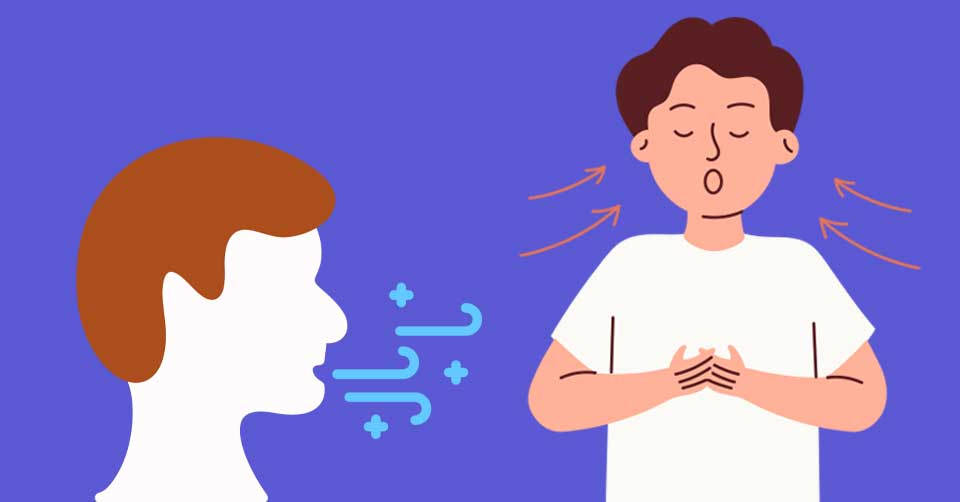
You can lower stress and calm anxiety quickly using deep breathing techniques. Breathing in specific patterns can be used to trigger your body’s natural relaxation mechanisms. Here are the seven most effective breathing exercises that can fully relax your mind.
7. Box Breathing (4-4-4-4) Calms You In High-Stress Situations
Box breathing, also known as 4-4-4 breathing, or square breathing, is a powerful and simple deep breathing exercise to relieve stress, calm anxiety, and improve your focus. Commandos like the US Navy SEALs often use this breathing technique to stay calm in high-stress situations.
It is called box breathing because there are four equal parts to the breathing process, like the four sides of a square.
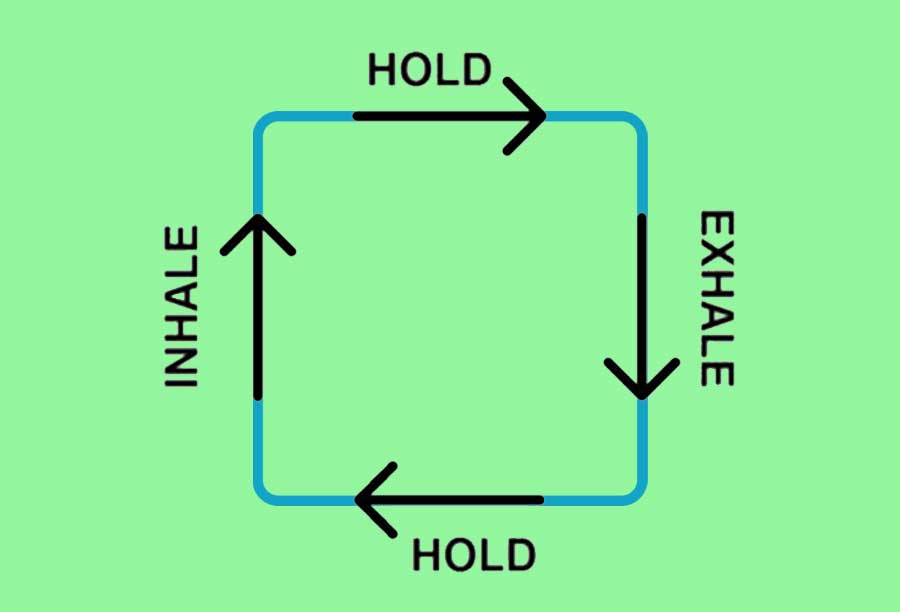
Here’s how you do it:
- Breathe in deeply, gently, and slowly through your nose for 4 seconds.
- Hold your breath inside for 4 seconds.
- Breathe out slowly, gently, and deeply through your mouth for 4 seconds.
- Hold your breath outside for 4 seconds.
This forms one cycle of box breathing. Repeat this process for 7 or more cycles until you feel relaxed. Box breathing lowers your stress and anxiety by activating your parasympathetic nervous system.
When to practice
- As you are going to sleep
- During a panic attack
- Before or during any stressful event
- As a daily morning practice
Benefits
- Lowers your stress hormone cortisol
- Relaxes your heartbeat
- Increases presence of mind
- Decreases blood pressure
- Regulates your emotions
6. Alternate Nostril Breathing Makes Your Mind Peaceful
Alternate nostril breathing is a potent method that has been used in yoga since ancient times to calm the mind. In Sanskrit, it is also known as Anulom Vilom or Nadi Shodhana pranayam. This method was used by monks and sages to create peace and tranquility in the mind.
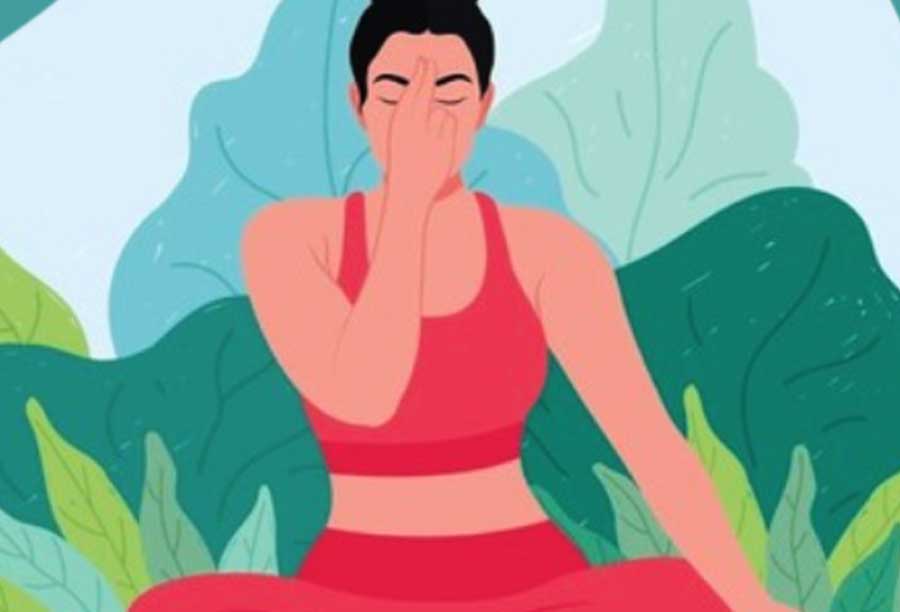
Here’s how you do it:
Setup
- Sit upright with your spine comfortably erect.
- Hold your right hand in front of your face.
- Keep your thumb hovering over the right nostril, and hover your ring finger and little finger over the left nostril.
- Relax your index and middle fingers on your forehead.
Starting
- Take a deep breath in through both nostrils.
- Close your right nostril with your thumb.
- Exhale slowly and deeply from your left nostril.
Technique
- Inhale slowly and deeply from your left nostril.
- Close your left nostril with your ring and little finger.
- Open your right nostril and exhale slowly and deeply.
- Inhale slowly and deeply from your right nostril.
- Close your right nostril with your thumb.
- Open your left nostril and exhale slowly and deeply.
- Go back to step 1 and repeat steps 1-6 at least 9 times.
Ending
Finish with an exhalation through the left nostril
You need to remember only two points to practice alternate nostril breathing correctly.
- Always start and end the process with an exhalation through the left nostril
- After each inhalation, you switch nostrils
When to practice
- As a daily calming practice
- When your mind is racing too fast
- Before going into any stressful situation
- During an anxiety attack
Benefits
- Balances the left and right brain hemispheres
- Improves emotional stability
- Reduces mental clutter
- Lowers anxiety and heart rate
- Improves sleep quality
5. Breathing Technique 4-7-8 Cools Down Your Nervous System
The 4-7-8 Breathing Technique is an impactful practice that makes your nervous system cool down and relax.Dr. Andrew Weil designed this process based on an ancient yogic pranayama (breath technique) and made it popular in the Western world.
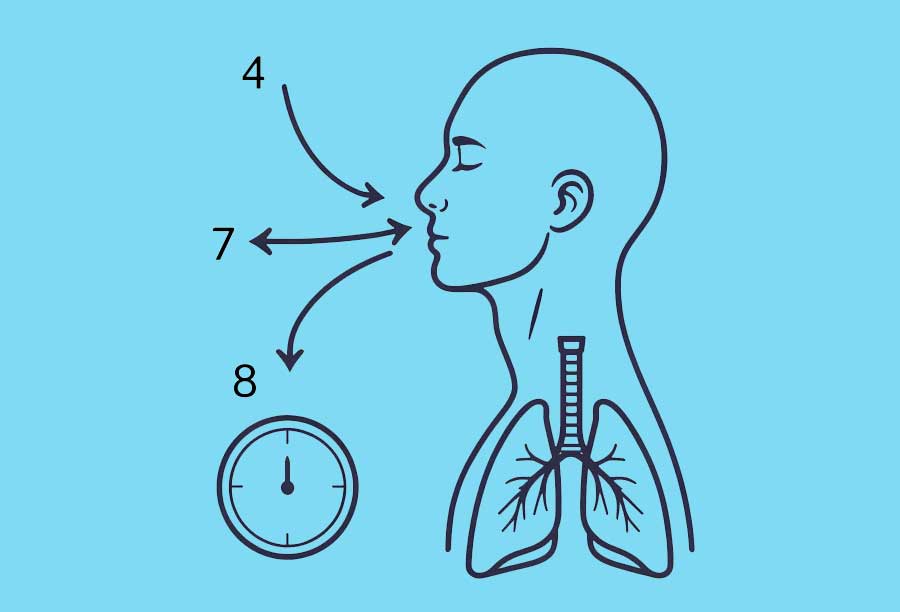
Here’s how you do it:
- Breathe in gently for 4 seconds through your nose
- Hold your breath for 7 seconds
- Breathe out slowly through your nose for 8 seconds
This is one cycle. Repeat the process for 7 or more cycles.
When to practice
- To fall asleep faster
- When you want to bring down anxiety
- To calm down emotional overwhelm
Benefits
- Increases oxygen exchange in the lungs
- Triggers your body’s rest and digest response
- Acts as a natural tranquilizer
4. Equal Breathing Technique Soothes Your Brain
Equal breathing technique is a quick strategy to relax and balance the mind. It is derived from Sama Vritti pranayama in traditional yoga.
Here’s how you do it:
- Breathe in slowly through your nose and start mentally counting 1, 2, 3 until your inhalation is complete. Let’s say your inhalation lasts for a count of 5.
- Now breathe out slowly through your nose for a count of 5.
- Repeat from step 1
Take care that the speed of counting remains the same for both inhalation and exhalation.Initially, your breath may be short, so you can do the practice for 2-3 minutes. Gradually, as the length of your breath increases, you can do the process for 5-15 minutes.
When to practice
- As you are getting ready to go to bed
- During stressful situations
- As a daily morning exercise
Benefits
- Trains you to breathe consciously
- Lowers mental overactivity
- Decreases blood pressure and pulse
3. Pursed-Lip Breathing Lowers Anxiety
Pursed-Lip breathing is a gentle breathing practice that improves the efficiency of each breath. It lowers stress and minimizes anxiety within a few minutes.
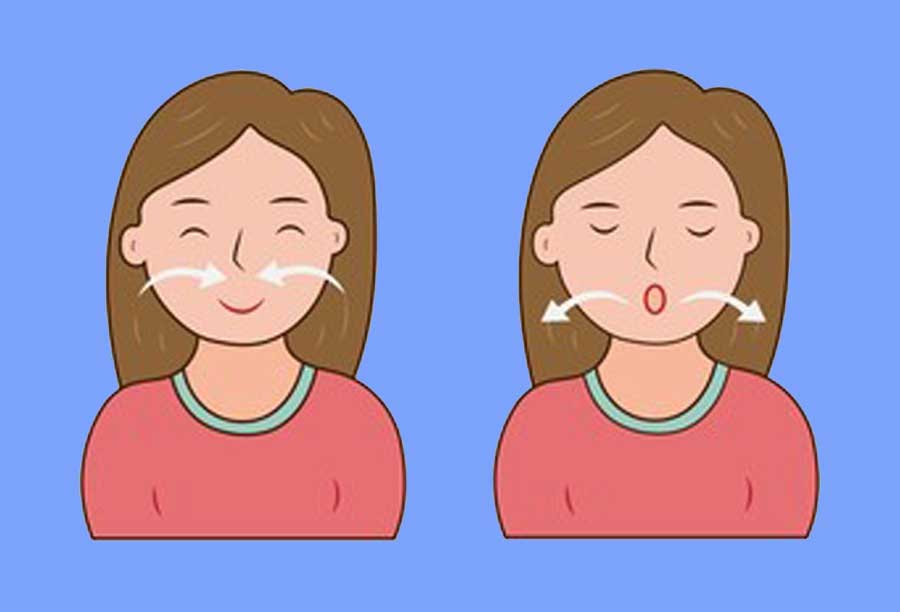
Here’s how you do it:
Sit in a comfortable position.
- Breathe in through your nose deeply and slowly until your lungs are full.
- Purse or pucker your lips like you are blowing out a candle.
- Breathe out through your mouth slowly and deeply.
- Repeat for 5 minutes.
When to practice
- During anxiety attacks or intense stress
- Whenever you feel short of breath
- When you feel emotionally overwhelmed
Benefits
- Improves air supply to your lungs
- Cools down your nervous system quickly
- Boosts oxygen intake
- Relaxes mind chatter
2. Belly Breathing Activates Your Body’s Natural Relaxation Response
Belly breathing, abdominal breathing, or diaphragmatic breathing is a simple breath technique that activates your body’s natural relaxation response. Most people unconsciously breathe with their chest in shallow and short breaths.
Shallow breathing can trigger the body’s fight or flight stress response. Using your abdomen or belly to breathe causes your lungs to take long, deep, relaxing breaths consciously.
Babies do belly breathing naturally, and that’s one reason why they can be so happy. As a child grows into a teenager, they unconsciously switch to shallow chest breathing. Going back to natural belly breathing can keep your mind calm all day long.
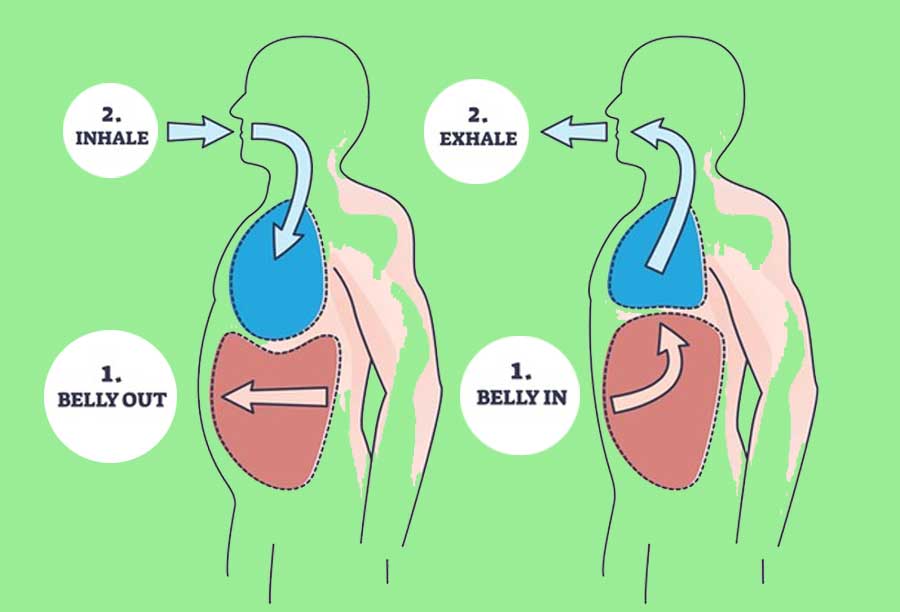
Here’s how you do it:
Sit with your spine comfortably erect.
Place one hand on your chest and the other on your belly.
- Breathe in gently while expanding your belly slowly.
- As you are inhaling, the hand on your chest should be as still as possible.
- The hand on your belly should rise as you inhale more and more.
- Once you have inhaled fully, now slowly and deeply breathe out.
- As you exhale, the hand on your belly should fall, and the hand on your chest should remain still.
This is one cycle. Repeat for 7 or more cycles. Initially, your chest hand may move a little. Take care to keep your chest as still as you practice this technique. With enough practice, one day you will naturally start breathing with your belly instead of your chest.
When to practice
- When you feel anxiety rising
- As a daily morning practice
- Before walking into stressful situations
Benefits
- Lowers your body’s stress hormone cortisol
- Creates a sense of calm and peace
- Improves oxygen and carbon dioxide balance in your body
- Decreases anxiety, depression, and blood pressure
- Increases mental clarity
1. Exhale Lengthening Is The Most Calming Breath Technique
Exhale lengthening, or stretching the length of your exhalation longer than the duration of your inhalation, is the simplest and most powerful method to relax and calm your entire system. It is one of the cornerstone techniques in ancient yogic pranayama that has the power to totally relax your body and silence your mind’s chatter quickly.
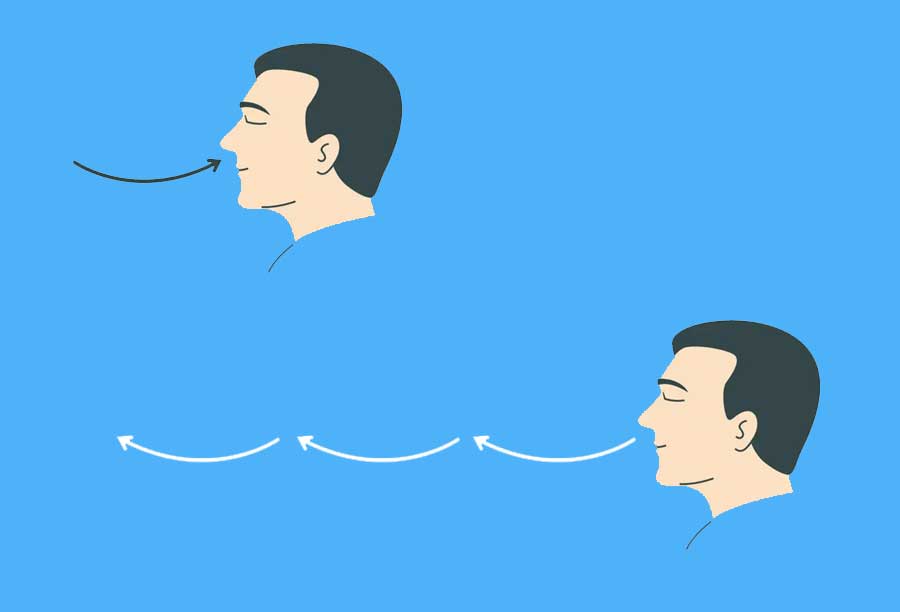
Here’s how you do it:
Sit or lie down in a comfortable position.
- Breathe in slowly for 4 seconds through your nose. (Slowly count 1 to 4 in your mind)
- Breathe out slowly through your nose for 6 seconds.
- Repeat for 5-7 minutes.
As you practice, this method will increase the length of your breath.
So increase the inhale-exhale time from 4-6 to 5-8 to 6-10 and so on.
For every second of increase in inhalation time, increase exhalation by 2 seconds.
When to practice
- Before going to sleep every night
- After waking up every morning
- Whenever you feel stress or anxiety building up
Benefits
- Activates the vagus nerve and immediately calms the nervous system
- Triggers your body’s natural relaxation mechanism
- Interrupts your body’s stress response
- Relieves tightness in the chest
- Promotes faster and better sleep
- Improves mental focus and clarity
- Enhances emotional stability
- Lowers blood pressure
Use these breathing styles to alleviate symptoms of stress and calm your anxiety quickly. Stress and anxiety can appear similar, but they are quite different. If you have been experiencing daily anxiety for several months, then we recommend you visit a therapist.
In addition, you can modify your eating habits to reduce stress-spiking foods and eat more anxiety-lowering foods. It is important to establish a daily relaxation routine to manage your long-term mental and physical well-being.